
Phonics and Reading Curriculum
Phonics and Reading Curriculum
Reading opens up the adventure
At Amington Heath Primary School and Nursery, we believe that learning to read is one of the most important things a child will ever do.
Reading gives children access to the whole curriculum, builds vocabulary and knowledge, develops imagination and empathy and opens doors to worlds, experiences and ideas beyond their own.
High-quality books are at the heart of every adventure, from Little Learners through to Year 6. We want every child not only to learn how to read successfully, but to become a confident reader who chooses to read, talks enthusiastically about books and understands the pleasure that reading can bring.
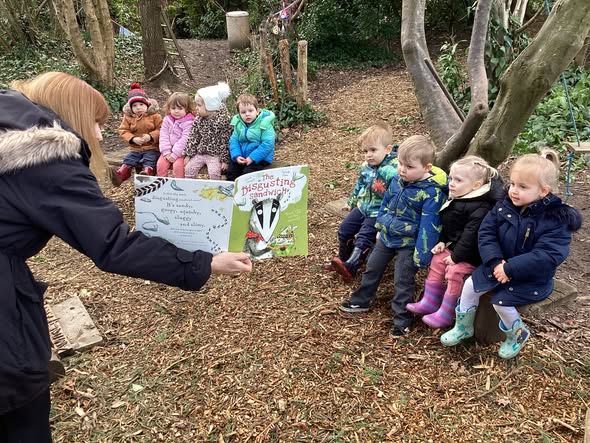 Our Approach to Early Reading and Phonics
From September 2026, we teach phonics and early reading using Little Wandle Letters and Sounds Revised, a systematic synthetic phonics programme.
Little Wandle provides a clear and consistent progression from the earliest foundations of language and phonological awareness in Nursery through to fluent, independent reading.
Children are taught to recognise sounds and the letters that represent them, blend sounds to read words and develop increasing accuracy, fluency and understanding.
Regular assessment helps teachers identify children who need additional practice so that support can be put in place quickly.
Building the Foundations in Nursery
Our youngest children begin their reading journey through Little Wandle Foundations.
In Nursery, children develop the language, listening and early phonological skills that prepare them for formal phonics teaching. This includes rich opportunities for:
- talk, conversation and high-quality adult interaction
- rhymes, songs and oral language
- listening carefully to sounds
- developing vocabulary
- sharing and talking about books
- building a lifelong love of stories and reading
Little Wandle Foundations includes strands for Phonics, Language and Love of Reading, giving children strong foundations before they begin the core programme in Reception.
Phonics in Reception and Year 1
Children begin the Little Wandle core phonics programme in Reception and continue through Year 1.
Phonics is taught daily in carefully structured lessons. Children learn new grapheme-phoneme correspondences, practise previously taught sounds and words and apply their knowledge through blending and reading.
The programme follows a clear progression so that learning builds systematically over time.
Children are assessed regularly. Where a child is at risk of falling behind, they receive Daily Keep-up support to provide additional practice closely matched to the teaching taking place in class.
Reading Practice
In Reception and Year 1, children take part in three carefully planned reading-practice sessions using books matched closely to the phonics they know.
Each session has a particular focus:
- decoding – applying phonics knowledge accurately to read words
- prosody – developing appropriate expression, phrasing and reading aloud
- comprehension – understanding and discussing what has been read
Children read Big Cat for Little Wandle decodable books that are carefully matched to their secure phonics knowledge. This means children can practise successfully and build confidence and fluency rather than being asked to tackle books containing unfamiliar phonics.
Books Coming Home
Home reading has an important part to play in children’s reading development.
Children may bring home different types of books for different purposes. A decodable reading book is matched to the phonics your child has already been taught, allowing them to practise reading independently and successfully.
Children will also have opportunities to share books chosen for interest and enjoyment. These books are not necessarily intended for the child to decode independently. They provide an opportunity for families to read together, talk about stories, discover new vocabulary and enjoy books without the pressure of having to read every word themselves.
Both experiences are important: children need opportunities to practise reading and opportunities to experience the joy of being read to.
Reading Beyond Year 1
As children become secure in phonics, our focus increasingly develops accuracy, fluency, vocabulary, comprehension and the ability to engage thoughtfully with increasingly complex texts.
From Year 2 onwards, children continue to develop reading through high-quality whole-class reading and the wider curriculum.
Children encounter a broad range of:
- fiction
- non-fiction
- poetry
- plays and performance texts
- texts linked to their Adventure Curriculum learning
- books selected specifically to broaden experience, vocabulary and cultural knowledge
Teaching develops children’s ability to retrieve information, make inferences, explain ideas, explore vocabulary, summarise, predict and discuss the choices made by authors.
Reading is not confined to the English lesson. Children apply their reading across the curriculum, using texts to investigate history, geography, science, the arts and the wider world.
Developing Fluency
Fluent reading allows children to concentrate on meaning rather than using all of their attention to work out individual words.
We use Little Wandle Fluency from Year 2 onwards where appropriate to support children in developing increasingly accurate, automatic and expressive reading.
Alongside this, strategies such as teacher modelling, repeated reading, paired reading, choral reading and purposeful reading aloud help children develop pace, expression and confidence.
Oracy, Vocabulary and Reading
Reading and oracy are closely connected.
Our curriculum gives children frequent opportunities to talk about books, hear rich language, explore new vocabulary, explain their ideas, listen to different interpretations and justify their thinking.
Teachers model ambitious language and encourage children to use increasingly precise vocabulary when discussing what they have read.
Through discussion, storytelling, performance and reading aloud, children develop both their understanding of texts and the confidence to express their own ideas.
Reading for Pleasure
We want children to learn to read – but we also want them to want to read.
Reading for pleasure is woven throughout life at Amington Heath. High-quality books are deliberately chosen to sit at the heart of our curriculum and our mini-adventures, helping children encounter exciting stories, important ideas, different perspectives and experiences beyond their own.
Children experience reading for pleasure through:
- regular opportunities to hear adults read aloud
- carefully selected class texts
- attractive and accessible classroom reading collections
- opportunities to choose and recommend books
- author, poetry and storytelling experiences
- books linked to curriculum adventures and children’s interests
- opportunities to talk about reading with friends and adults
We aim to develop a community in which books are valued, talked about and enjoyed.
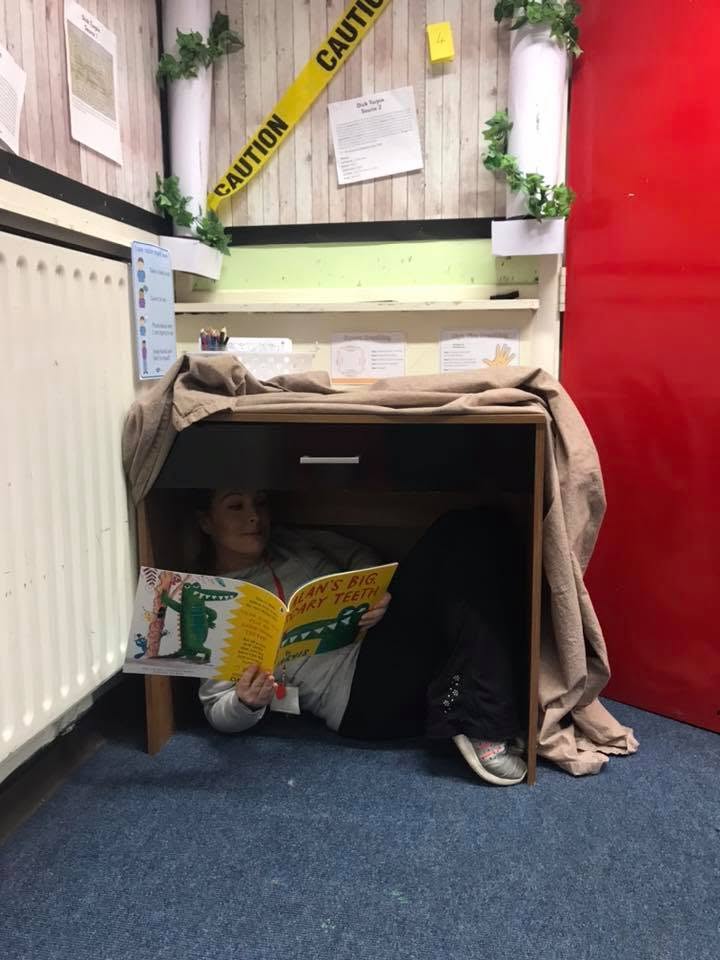 Support When Children Need More
Children learn to read at different rates. We monitor reading carefully so that additional support can be provided when it is needed.
This may include:
- Daily Keep-up for children in Reception and Year 1 who need additional practice
- Little Wandle Rapid Catch-up for pupils in Year 2 to Year 6 who are not yet reading at age-related expectations
- the Little Wandle SEND programme where a more individualised or graduated approach is appropriate
- additional fluency practice
- targeted teaching based on assessment and the child’s individual barriers to reading
Our aim is to identify difficulty early, provide carefully matched support and help every child become an increasingly confident and independent reader.
Reading and the Adventure Curriculum
Books provide a gateway into many of our adventures.
High-quality texts can spark curiosity at the beginning of a mini-adventure, provide knowledge and vocabulary as learning develops and inspire writing, discussion, investigation, creativity and performance.
From Nursery to Year 6, we deliberately use literature to help children explore people, places and ideas they may not otherwise encounter. Reading therefore contributes not only to academic success but to children’s cultural knowledge, empathy, aspirations and understanding of the wider world.
For our children, reading really does open up the adventure.
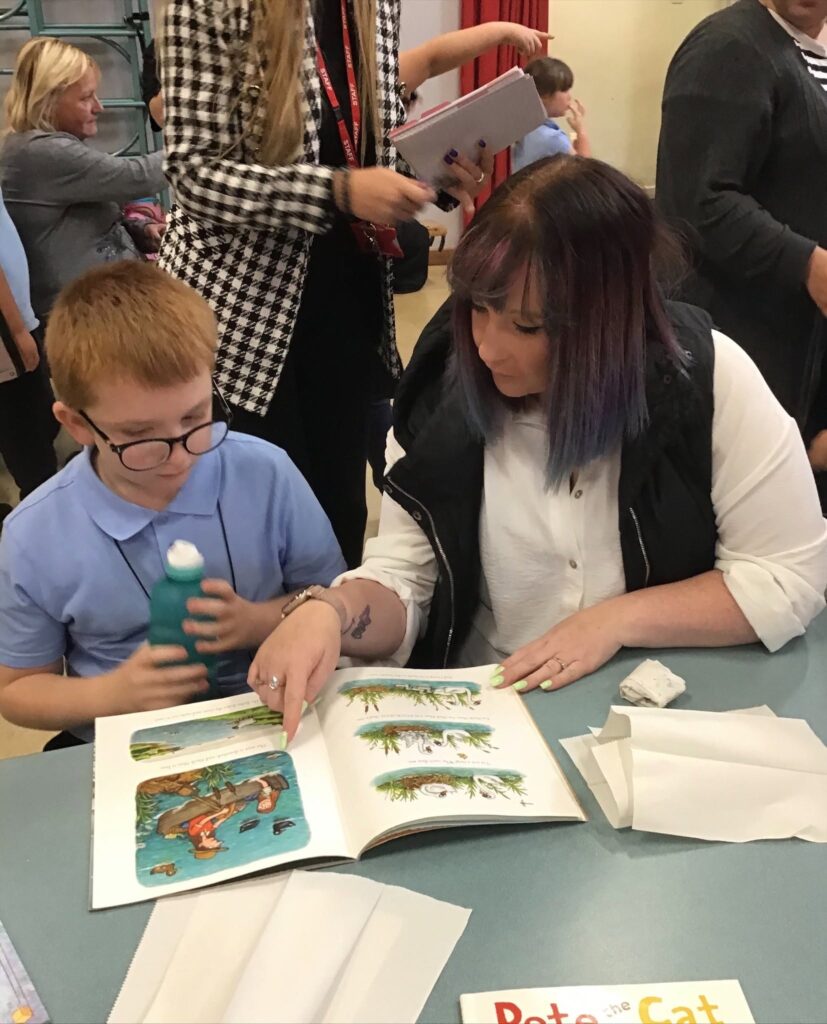 Supporting Reading at Home
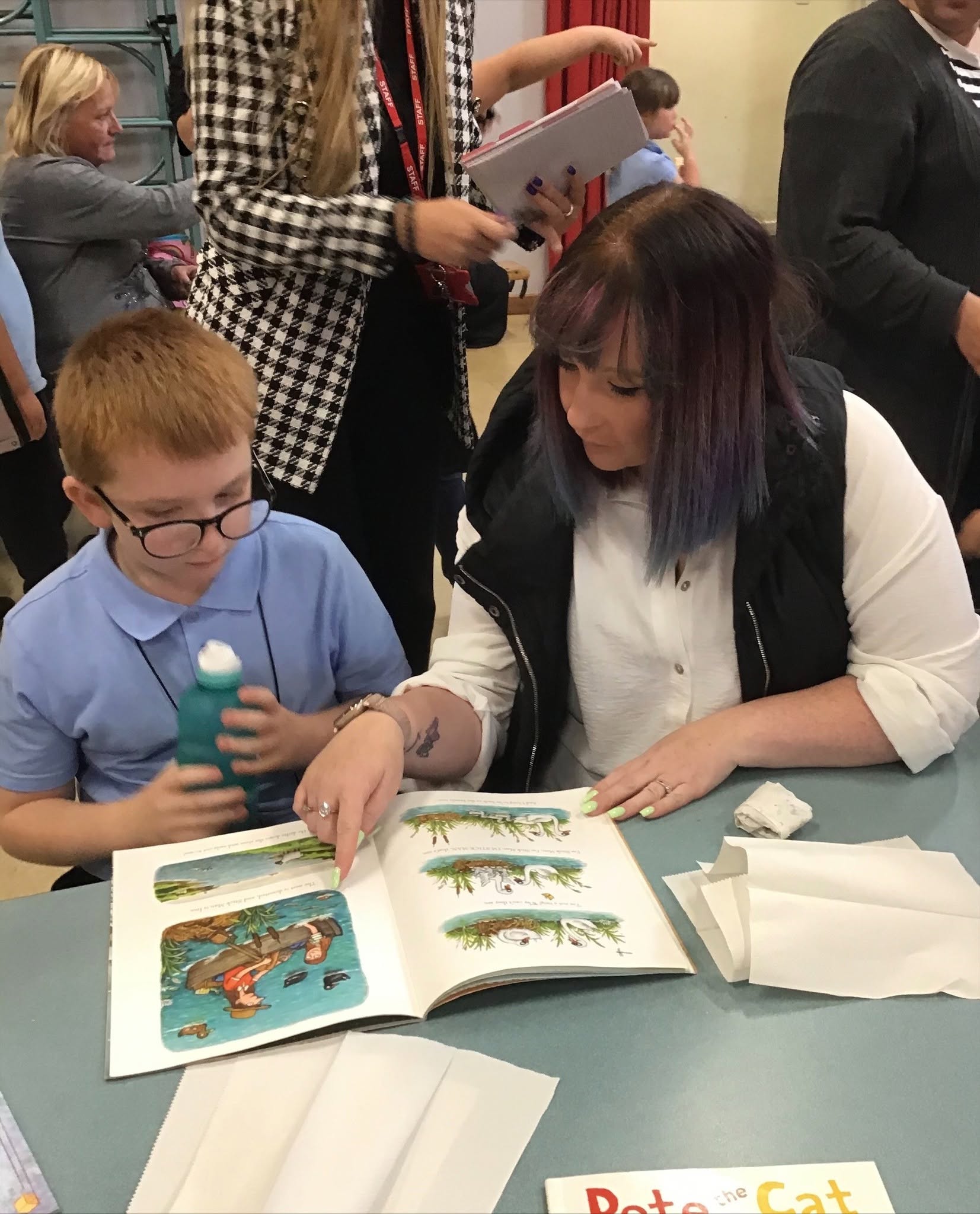
Families play a hugely important part in helping children become confident readers.
We encourage parents and carers to:
- read regularly with and to their child
- allow children to practise their matched reading book
- continue reading aloud even when their child can read independently
- talk about characters, ideas and new vocabulary
- visit libraries and help children discover books that interest them
- make reading an enjoyable part of everyday family life
Little Wandle provides videos, guidance and resources specifically for parents and carers, including information about pronunciation of sounds, blending, tricky words and books coming home.
Little Wandle – Support for Parents and Carers
Our Phonics and Reading Schemes
Our systematic synthetic phonics programme is Little Wandle Letters and Sounds Revised.
Our matched early reading books include Big Cat for Little Wandle.
We also use Little Wandle Foundations, Daily Keep-up, Rapid Catch-up, SEND and Fluency programmes as appropriate to children’s age and reading needs.
Find Out More
If you would like further information about our phonics and reading curriculum, please speak to your child’s class teacher or contact the school office.
Telephone: 01827 337465
Email: office@amingtonheath.staffs.sch.uk