
Maths Curriculum
Maths Curriculum
Building confident, curious mathematical thinkers
At Amington Heath Primary School and Nursery, we want children to see mathematics as something they can understand, explore and enjoy.
Our maths curriculum is carefully structured to develop strong number sense, fluency, reasoning and problem-solving. Children revisit important knowledge regularly so that learning is remembered, strengthened and connected over time.
We want every child to become a confident mathematical thinker who can explain their ideas, make connections, tackle unfamiliar problems and recognise the value of mathematics in everyday life.
Our Spiral Curriculum
Mathematics at Amington Heath is taught through our own carefully designed spiral curriculum.
Rather than teaching an idea once and moving on, important concepts are revisited systematically. Each return builds on what children already know, allowing them to deepen understanding, strengthen recall and make increasingly sophisticated connections.
This helps children to learn more and remember more, while giving teachers regular opportunities to identify and address gaps or misconceptions.
Maths is taught as a distinct subject. Where meaningful opportunities arise, children make links with learning in other curriculum areas, but these connections are used purposefully rather than artificially.
Mathematics in the Early Years
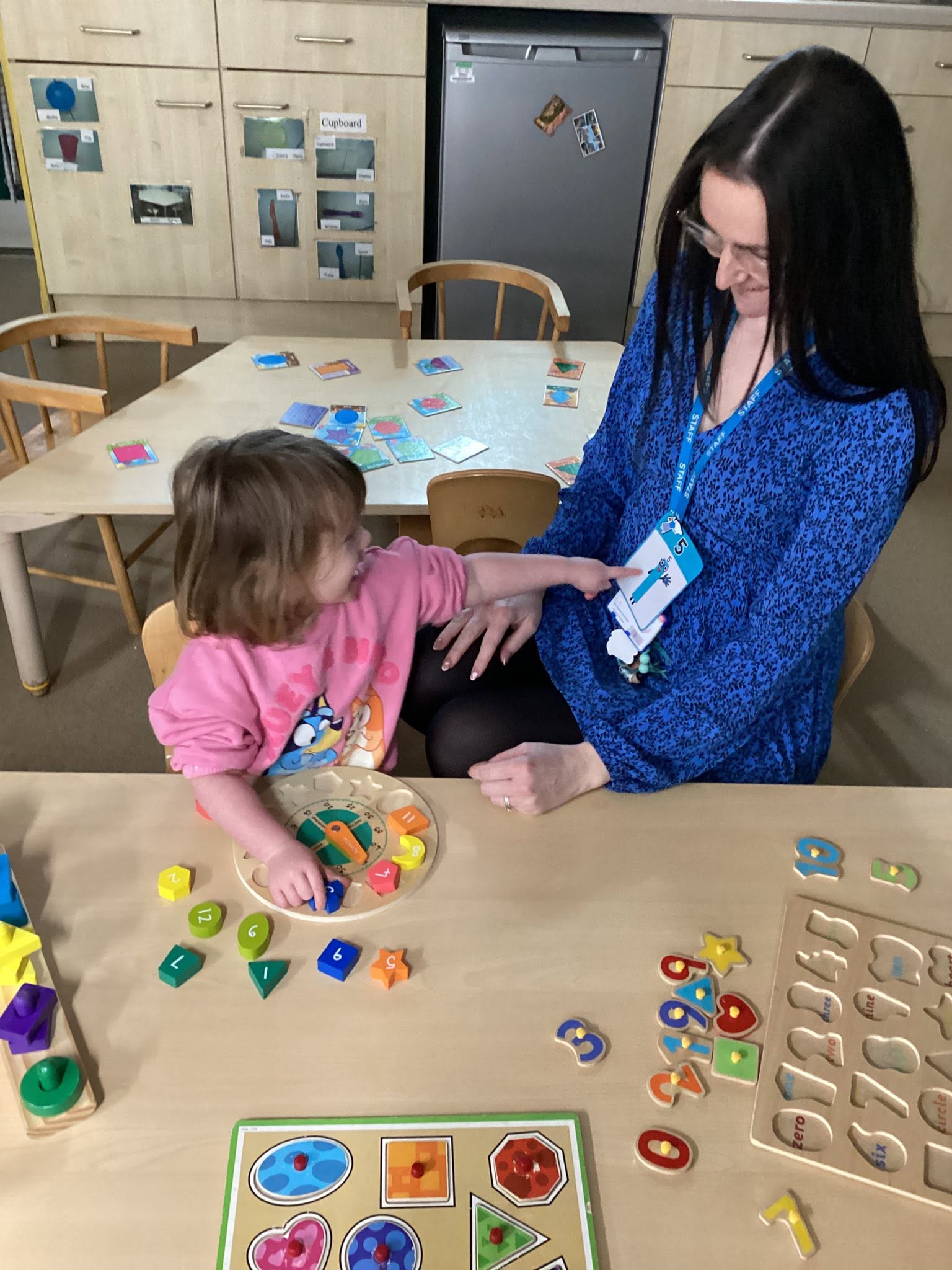
Our youngest children develop mathematical understanding through a rich combination of play, talk, practical experience and carefully planned teaching.
Across Little Learners, Nursery and Reception, mathematical learning includes:
- our own spiral Numberblocks curriculum
- Snappy Maths
- small-group teaching
- mathematical songs and rhymes
- carefully planned continuous provision
- practical opportunities to explore number, pattern, measure and shape
- explicit teaching of mathematical vocabulary
Key knowledge and vocabulary are mapped progressively so that children’s understanding develops from their earliest experiences and prepares them for the National Curriculum in Year 1.
 Maths in Years 1–6
From Year 1 to Year 6, children have five mathematics lessons and four arithmetic sessions each week.
This combination allows children to develop both secure mathematical understanding and increasing fluency with number facts and calculation.
Learning is sequenced carefully within our spiral curriculum so that children revisit key concepts, build on prior knowledge and have repeated opportunities to apply what they know in different ways.
Our STAR Approach
Our mathematics lessons are built around a consistent approach that children know as STAR:
See it
Children explore clear examples and models of the mathematical idea. Teachers make thinking visible and draw attention to important structures, representations and vocabulary.
Try it
Children begin to practise the new learning, supported where appropriate by concrete, pictorial and abstract (CPA) representations.
Apply it
Children use their learning in different contexts, including problems and real-life situations, helping them understand when and why particular mathematical approaches are useful.
Reason it
Children explain, justify and prove their mathematical thinking. They consider different approaches, make connections and learn to communicate their reasoning clearly.
STAR helps children move from understanding a new idea to using it independently and reasoning with increasing confidence.
 Concrete, Pictorial and Abstract Mathematics
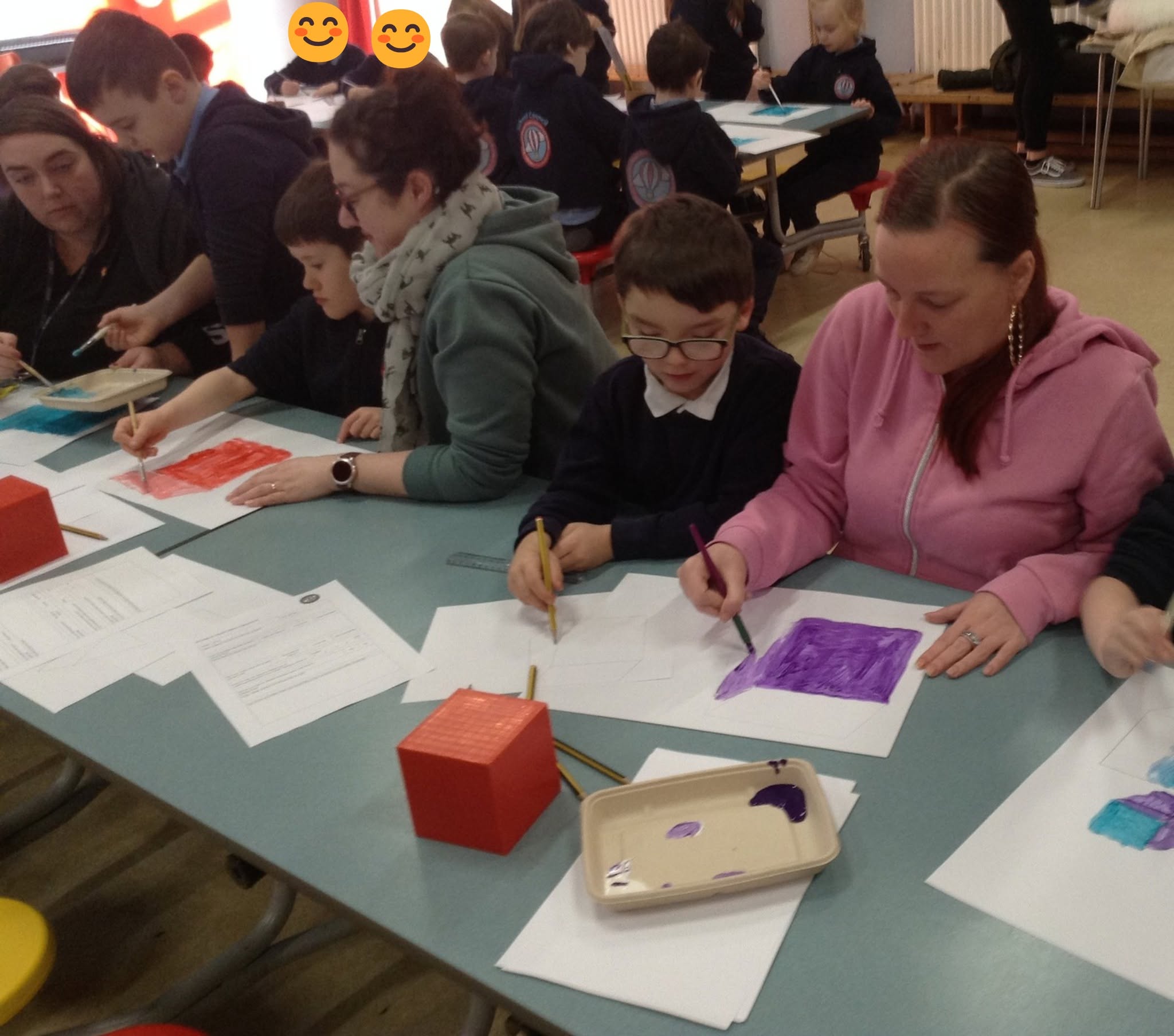
Children develop mathematical understanding through carefully chosen representations.
Concrete resources allow children to physically explore mathematical structures. Pictorial representations help them make those structures visible, and abstract notation enables them to record and manipulate mathematics efficiently.
These approaches are not restricted to younger children. Resources and representations are used whenever they help a child understand a concept more deeply or remove a barrier to learning.
Arithmetic and Fluency
Fluency gives children the secure foundations they need to think mathematically without being overloaded by basic calculations.
Our regular arithmetic sessions revisit key knowledge and respond to assessment. They include elements such as:
- High 5 questions linked to prior learning and areas of focus
- rapid recognition of number and mathematical facts
- subitising and number knowledge in younger year groups
- properties of shape and mathematical vocabulary
- times-table and corresponding division-fact practice
- active practice of mental calculation strategies
Children also use Times Tables Rock Stars and NumBots to practise important number facts both in school and at home.
Oracy in Mathematics
Mathematical talk is a golden thread throughout our curriculum.
We want children not only to arrive at an answer, but to be able to explain how they know, justify their choices and listen thoughtfully to the reasoning of others.
Children regularly have opportunities to:
- explain methods and strategies
- justify answers using mathematical evidence
- compare different approaches
- identify and discuss misconceptions
- ask and answer mathematical questions
- use precise mathematical vocabulary
- reason collaboratively with partners and groups
The Reason it stage of STAR gives this a particularly important place within mathematics.
Building Mathematical Vocabulary
Understanding mathematical language is essential if children are to understand ideas and communicate their thinking precisely.
Vocabulary is deliberately taught and revisited throughout our spiral curriculum.
Alongside vocabulary within lessons, we use a Maths Word of the Week and Shape of the Week to strengthen familiarity with important terminology and properties across school.
Children are encouraged to use accurate vocabulary when explaining, reasoning and discussing mathematics.
Assessment That Informs Teaching
Assessment is used throughout mathematics to understand what children already know and what they need next.
Units begin by revisiting essential prior learning so that teachers can identify strengths, gaps and misconceptions before introducing new content.
Teachers then use questioning, observation, children’s work and ongoing assessment to adapt teaching and provide appropriate practice or support.
End-of-unit assessment helps teachers evaluate what children have understood and informs future teaching within the spiral curriculum.
An Inclusive and Ambitious Maths Curriculum
We have high expectations for all children.
Where children need additional support, teachers use careful scaffolding and appropriate resources to make mathematics accessible without unnecessarily reducing ambition.
This may include:
- concrete manipulatives and visual representations
- additional modelling
- breaking learning into smaller steps
- additional opportunities for rehearsal and practice
- pre-teaching or revisiting mathematical vocabulary
- carefully targeted adult support
- additional intervention where appropriate
Children who are ready to deepen their understanding are challenged through increasingly complex application and reasoning rather than simply being moved rapidly onto unrelated content.
Mathematics at Home
Regular practice at home can help children build confidence and automatic recall of important number facts.
Children can access:
Families can also access our calculation-support videos through the school YouTube channel.
Our Maths Curriculum and Calculation Policy
Our whole-school Maths Curriculum Map shows how mathematical knowledge and skills are revisited and developed progressively across the school.
View our Whole-School Maths Curriculum Map
Our Calculation Policy explains the progression in the methods and representations used to teach calculation from Reception to Year 6.
Find Out More
If you would like more information about our mathematics curriculum, please speak to your child’s class teacher or contact the school office.
Telephone: 01827 337465
Email: office@amingtonheath.staffs.sch.uk